Every Christmas, it comes home with the turkey order: the calendar from the local butcher. Then there's the one from the garage, the pharmacy, and the GAA club's fundraiser with a different team photo every month. Nobody asked for them, but they all end up on a wall somewhere, and most of them are still there next December. That's what a good calendar does. If you're wondering how to make a calendar that earns its place in someone's kitchen, start with the ones that already have. (For the bigger picture, read why printed calendars are the gift that keeps on giving.)
Why the free calendar never comes down
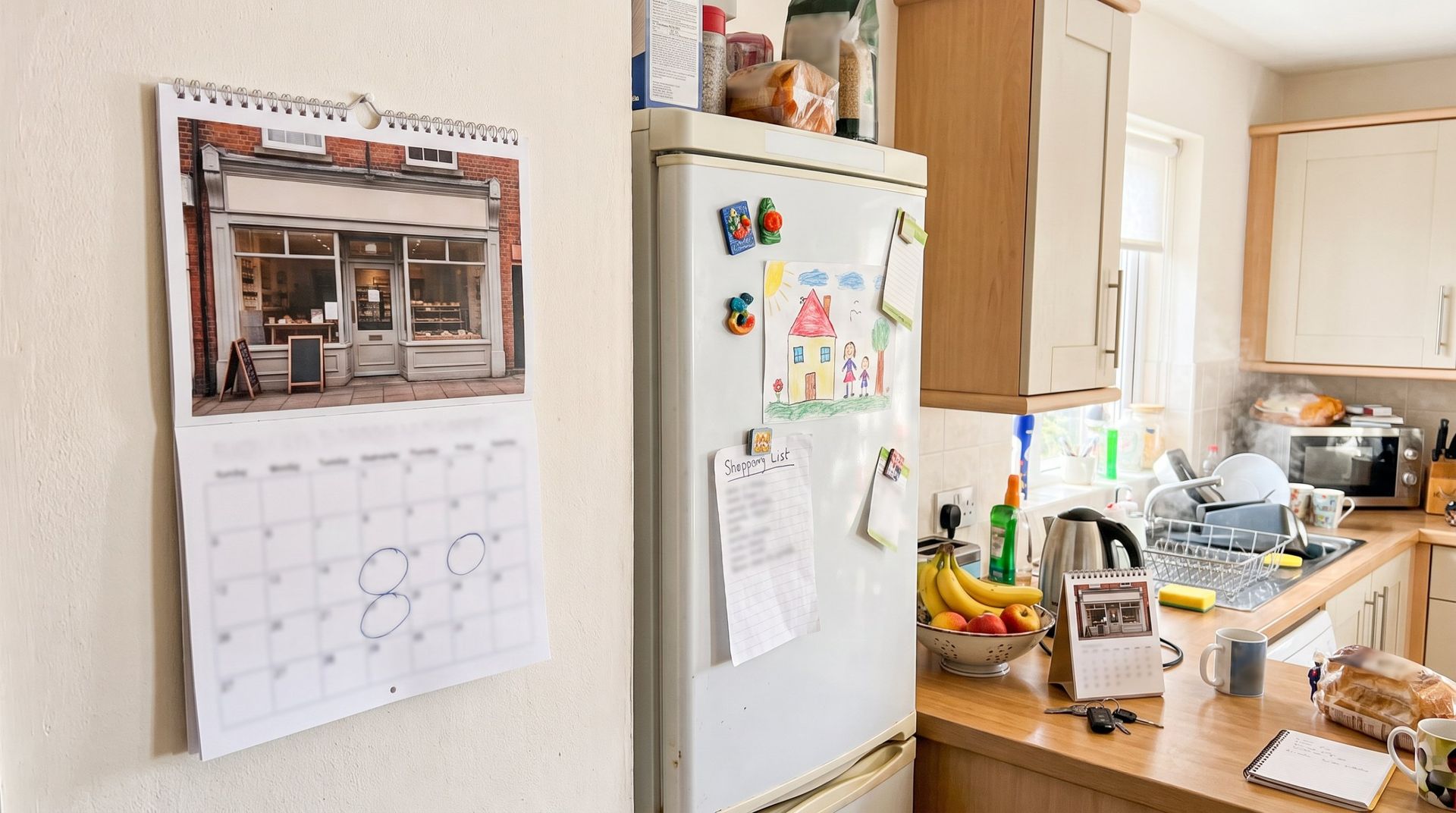
The local shop calendar is a small Irish institution. Handed over at the counter in the last weeks of the year, it lands by the fridge or on the back of a door and stays there for twelve months. It isn't fancy, and it doesn't need to be. People check it every day: for the bin collection, the school holidays, the date of a match. Club calendars add one more trick: people know the faces on them, a neighbour in March, the under-12s in June.
That's the whole secret. A calendar stays up when it's useful, nice enough to look at, and feels like it came from someone you know. A logo on its own has never got anyone through a whole year.
Start with where it will hang
Before you think about pictures, think about the spot. A calendar that doesn't fit its place ends up in a drawer.
- In the kitchen or the workshop, a wall calendar with a big picture each month does the talking.
- On an office desk, a desk calendar stands on its own, right next to the keyboard.
- For anyone who likes to plan ahead, a three-month memo calendar shows three months at a glance, with space to jot things down.
- On the office wall where the whole team checks deadlines, a year planner puts all twelve months on one sheet.