

Marketing with flyers? Good idea. Eye-catching design? Done. To send the right message you have to also have to decide on the right paper thickness. Some believe the flyer thickness does not matter in printing flyers. In reality, it says more about your brand than you think.
We’ll help you make the right choice for your business with this “Flyer paper explained” guide. First things first, we need to know the different flyer types out there. The most common flyer paper types in the market are the following:
Maximize promotion 135 gsm
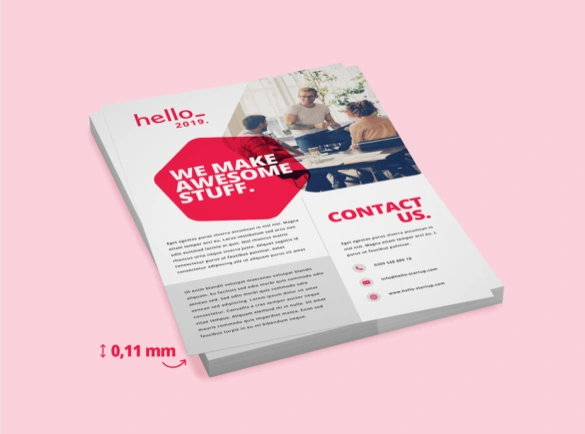
Flyers with 135 gsm (grams per square meter) are a popular choice for the mass promotion of business' products and services. This flyer thickness will make any brand appear professional and legitimate, despite it being the thinnest paper type. These flyers are also durable and less prone to wrinkling. It’s also easy for potential customers to put them in their pockets and bags.
When should I use it? It’s a very cost-effective solution, great for promotional flyers if you plan to distribute them to a large number of people. It’s the cheapest option and is considerably better than regular printing paper.
Don’t stress, just impress 170 gsm
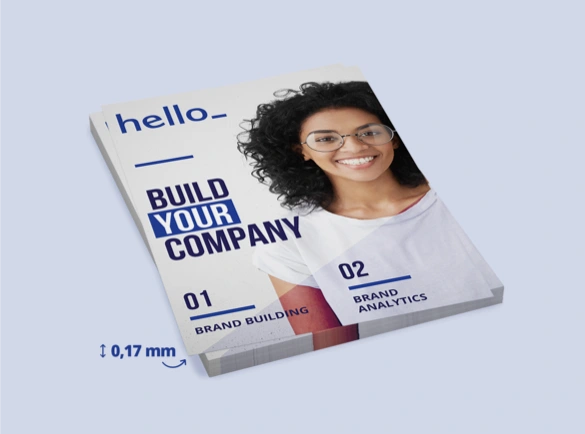
Any customer who receives flyers with 170gsm thickness will see the business as professional, legitimate, and trustworthy. While still pretty thin, 170 gsm flyers are sturdy and thick enough to last long after the trade show or conference is over. They are also easy to fold and store.
When should I use it? It’s the perfect thickness for flyers made for trade shows and other business events to impress potential clients, you can distribute them to other businesses, as well as individual customers.
High class 250 gsm
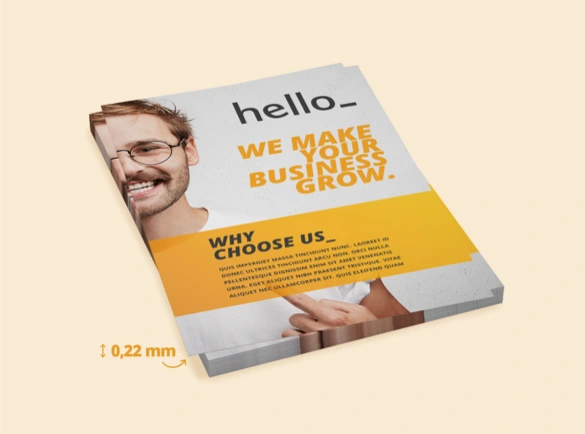
Appear stylish and luxurious with 250 gsm flyers. Many hospitality and retail promotions often use this paper thickness to stand out more. Keep in mind that it is less convenient to carry around these flyers as they are hard to fold and put away. However, they are quite thick and sturdy, which leaves customers with a deluxe impression of your business.
When should I use it? Use this thickness for flyers you plan to leave in high-traffic public spaces. The thicker flyers, will stand out from the pile of promotional materials left at the dentist's office, for example.
Flyers as an art piece 400 gsm
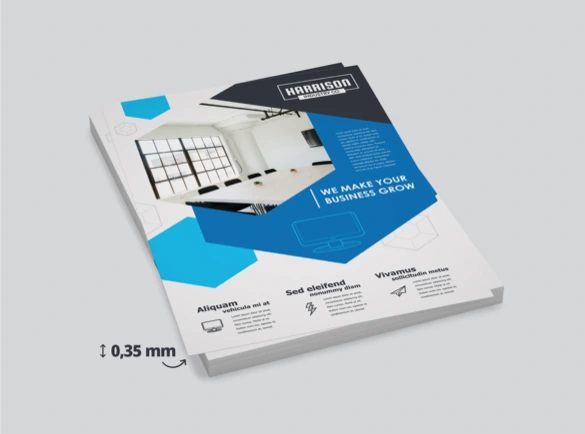
Use 400 gsm paper in order to have leaflets that last a long time. This thickness is perfect for flyers with a highly sophisticated design, which look like a piece of art. If you're set on creating a luxurious premium flyer, this is the paper thickness for you.
When should I use it? Have these flyers at your own office and give them away to potential business partners, which arrive for a meeting. Or take them with you when you go to another company’s office and leave some in their lounge.
The thickness of your flyer plays a part in how people perceive your brand. The next time you print your flyers, you can now choose confidently what flyer thickness will be best to promote your business.